

Succumbing to Desires
If one exercises control over his desires, he will be protected. It is therefore vital that desires are subservient to the mind or else, one will face destruction. The most destructive form of desires is lust. Uncontrolled lust will result in physical weaknesses. The other destructive desire is gluttony. Overeating causes an increase in the rebellious nature of the Nafs. However, if one does not eat properly, this too will cause both physical and mental problems.
What we learn is that moderation must be the yardstick in life. Moderation is a virtuous trait which must be sought. It is therefore important to have presence of mind. If one reflects and concerns himself in attaining success in the Aakhirah, and becomes a true slave of Allah Ta’ala جل جلاله, the result will be that one will attain a balanced perspective.
[hr height=”30″ style=”default” line=”default” color=”” themecolor=”0″]
Do You Search for Rizq?
Once Hazrat Haatim Asamm رحمه الله asked the distinguished jurist Hazrat Imam Ahmad bin Hambal رحمه الله : “Do you search for Rizq (sustenance)?” Hazrat Imam Ahmad bin Hambal رحمه الله said: “Yes.” Hazrat Haatim Asamm رحمه الله then asked: “Do you search for it before its time or after its time?”
Hazrat Imam Ahmad bin Hambal رحمه الله thought: “If I say, before its time, he will respond – ‘Why waste time?’ and if I say – ‘After its time’, he will say – ‘Why pursue something which has already transpired?’ If I say – ‘I search for it on its time’, he will say – ‘Why search for something which is already found?’” Imam Ahmad bin Hambal رحمه الله remained silent in bewilderment.
A pious saint commented; “The answer for this question is: ‘The search for Rizq is not Fardh nor Waajib nor Sunnah. Why should one search for something which is beyond the confines of these categories? And why should one search for something which itself is searching for you?’ This is affirmed by Sayyiduna Rasulullah صلى الله عليه وسلم. This is in fact the response to the question of Hazrat Haatim Asamm رحمه الله. Hence the pious servant said: “Upon us is to worship Him as He had commanded, and upon Him is to feed us as He has promised.”
NOTE
- The stage of conviction (Yaqeen) was of a very high degree in these pious personalities. They possessed a perfect conviction in the statement of Sayyiduna Rasulullah صلى الله عليه وسلم that Rizq follows one.
- These advices do not negate the fact that to search for Rizq is an injunction of the Qur’ān and Sunnah. What is highlighted to us weak ones is that subservience and reliance unto Allah Ta’ala جل جلاله will ensure the provision of sustenance. The impediment nowadays is that people slip into transgression in search for sustenance.
Hazrat Haatim Asamm رحمه الله offered profound advice to an individual: “Banish having hopes on others so that they too will have no hope in you. Worship Allah Ta’ala جل جلاله in such a manner that no one besides Allah Ta’ala جل جلاله and you are aware thereof. Wherever you are, be of service to creation.”
[hr height=”30″ style=”default” line=”default” color=”” themecolor=”0″]
Iman and Transgression
Shaikh Abdur Rahman ibn al-Jawzi رحمه الله has observed that a believer is not in sin, rather he detests disobedience and has no resolve to transgress. If he slips into sin, he does not commit the sin again.
Furthermore, circumstances in the life of a believer always change. Allah Ta’ala جل جلاله states in the Holy Qur’an:

“These are the days that We cause to alternate between people”
(Surah Ali Imran:140)
Sometimes one is in affluence and at times one is reduced to poverty and affliction. On some occasions, a person is honoured which results in his friends to rejoice; whereas at other times disgrace replaces honour and then the enemies rejoice. The yardstick of intelligence is that a believer always observes Taqwa (righteousness) because he acknowledges that he will pass through favourable circumstances and he needs to be grateful. Sometimes a believer faces adversity but here too, he practices patience. The unique temperament of a believer is that he will find comfort in illness and he will find protection in difficulty.
In life, everything is meaningless and temporary. On the other hand, Taqwa is enduring and does not allow one to falter. The believer has conviction in the fact that the observance of Taqwa in every aspect of life, be it favourable or unfavourable, will ultimately ensure blessings in the Aakhirah.
[hr height=”30″ style=”default” line=”default” color=”” themecolor=”0″]
CONSEQUENCES OF SIN AND PIETY
Shaikh Abdur Rahman ibn al-Jawzi رحمه اللهhas said that a person will not fall into sin if he thinks of the consequences. There are many who are involved in perpetual indecency and cannot control themselves inspite of their intellectual strength. They forget the Aakhirah and do not involve themselves in Zikrullah. Furthermore, they become obsessed with the possessions of others and they blame taqdeer for their plight.
There are people who choose modesty; they find bliss in their lives and are showered with blessings. Even if they are in financial difficulty, they submit to the orders of Allah Ta’ala جل جلاله to this extent that they are pleased in difficulties.
!سبحان الله
Their condition is described by Allah Ta’ala جل جلاله in the Kalaamullah:

The fact is that whoever adopts taqwa and exercises Sabr, then Allah surely does not put to waste the reward of those who do good (Surah Yusuf:90)
[hr height=”30″ style=”default” line=”default” color=”” themecolor=”0″]
Sign of Refinement
Hazrat Haatim Asamm رحمه الله once said to his disciples; “I have devoted a great portion of my life teaching you. Is there anyone among you who could be said to be cultured and refined?”
A disciple said; “A certain person has spent much time in Jihād.”
Hazrat Haatim Asamm رحمه الله replied; “He is called a Ghaazi. I am in search of a cultured and refined person.”
Someone else said; “A certain person had spent much wealth in the path of Allah Ta’ala جل جلاله .”
Hazrat Haatim Asamm responded; “He is called a generous person. I want a cultured and refined person.”
Another disciple said that a certain individual had performed many Hajj to which Hazrat Haatim Asamm رحمه الله said; “He is called a Haaji. I ask for a cultured and refined person.”
The disciples then asked; “Hazrat, do inform us who is a cultured and refined man.”
Hazrat Haatim Asamm responded; “(A cultured and refined person is..) The one who fears Allah Ta’ala جل جلاله and has no hope in anyone but Allah Ta’ala جل جلاله.”
[hr height=”30″ style=”default” line=”default” color=”” themecolor=”0″]
REFLECTIONS
There is no doubt whatsoever that one of the root causes of sin, deviation and heedlessness is due to the lack of the fear of Allah Ta’ala جل جلاله . We have drifted away from acknowledging Allah Ta’ala جل جلاله as He ought to be acknowledged is due to a deficiency in the spiritual virtue of khawf (fear). Hazrat Moulana Muhammad Maseehullah Khan Sahib رحمه الله has advised that a person should inculcate khawf (fear) by reflecting on the retribution of Allah Ta’ala جل جلاله with regards to his actions. Presently, it is the sheer tolerance of Allah Ta’ala جل جلاله that has prevailed. Hazrat Moulana Muhammad Farooq Sahib رحمه الله has said that it is by virtue of the elderly, children and animals that has resulted in the punishment being withheld. Had it not been the sheer magnanimity of Allah Ta’ala جل جلاله; matters would have certainly been different.
The underlying lesson is that we require to focus on the aspect that Allah Ta’ala جل جلاله is Ever Watchful and at the same time involve ourselves in those actions that will earn His Divine Protection and Mercy.
[hr height=”30″ style=”default” line=”default” color=”” themecolor=”0″]
Tazkiyah – A Function of Nubuwwah
Ārif Billāh Hazrat Moulana Hakeem Muhammad Akhtar Sahib رحمه الله has said that many have the wrong notion that it is the work of the Ahlullāh and not the Ambiyaa علیهم السلام that takes place in the Khaanqah. Hazrat رحمه الله states; “The Khaanqahs that are constructed for the fulfilment of the function of Tazkiyah-e-Nafs are in effect the realisation of the function of Nubuwwah. Tell me, was the Aayah containing
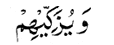
He, Rasul صلى الله عليه وسلم purifies them (Surah Ali Imran:164)
in relation to the Awliyaa رحمهم الله or with respect to Huzoor صلى الله عليه وسلم, that My Nabi صلى الله عليه وسلم makes their Tazkiyah or purifies them? Therefore, for the sake of Tazkiyah are Khaanqahs constructed; is Shaikh/Disciple resorted to which is the means of keeping alive this function of Nubuwwah. To refer to it (Tazkiyah) as the work of the Awliyaa is nothing but foolishness and a lack of knowledge. Both the layperson as well as the educated are in need of this branch of Tazkiyah.”
[hr height=”30″ style=”default” line=”default” color=”” themecolor=”0″]
Lapse Upon Lapse
From the advices of Shaikh Abdur Rahman ibn al-Jawzi رحمه الله, we learn that the repeated admonitions from Allah Ta’ala جل جلاله warn the persistent sinner to reflect, rectify his life and save himself from lethargy. The respected Shaikh observes; “O you intelligent one, why do you sin again and again? Think of its repercussions and do not prefer the fleeting pleasure over the everlasting blessing or barter the precious against the cheap. Do not choose a moment’s negligence over the perpetual awareness.”
The respected Shaikh laments; “Alas! You are buying regret and remorse and carrying a backbreaking weight that will bring unending tears of grief. Other people will punish you and give you bad names and ask, ‘Why did you not think?'”
[hr height=”30″ style=”default” line=”default” color=”” themecolor=”0″]
An Amazing Story
Hazrat Sahl bin Abdullah Tastari رحمه الله has said that he saw himself one night in a dream on the plains of Qiyamah. People were overwhelmed with fear. Suddenly he saw a white bird lifting a person and taking him into Jannah. In this manner, the bird repeatedly returned to take a person into Jannah. Hazrat Sahl رحمه الله wondered as to the wisdom of this; he then saw a folded paper in front of him. He opened it and in it was written, “The name of this bird is Warā’ (piety).”
He was then led into Jannah and on entering it, he saw a crowd of 300 people. After greeting them, he asked; “While on earth what did you fear the most?” All replied; “An evil death.’
Have we made it a point daily to ponder whether we have involved ourselves in actions that will preserve our Iman or compromise our faith? May Allah Ta’ala جل جلاله help and guide us!
آمين