
وعنه أيضا (أي: أبي هريرة رضي الله عنه) قال: قال رسول الله صلى الله عليه وسلم من صلى علي عند قبري سمعته ومن صلي على من بعيد أعلمته (القول البديع ص ٣٢٥)
It is reported in the Hadith that Hazrat Rasulullah صلى الله عليه وسلم said, “When you recite Durood at my grave, I hear your Durood, and when you recite Durood from afar, then your Durood is conveyed to me (via the angels).”
(The Gift of Durood and Salaam pg.64)
Commentary
Mullah Ali Qari رحمه الله has written that it is best to recite Durood Shareef close to the blessed grave of Rasulullah صلى الله عليه وسلم because one will then be more attentive and will display more humility. The author of Mazaahir Haq explains that whilst the travelling angels bring the Durood recited from far, Rasulullah صلى الله عليه وسلم personally hears the Durood recited at the Raudhah Mubarak. Nevertheless, Rasulullah صلى الله عليه وسلم replies to the Salam in both cases. From this we understand the great honour the person receives when making Salam to Rasulullah صلى الله عليه وسلم, especially for those who do so very often.
(Fazaail Durood pg.35)
In his book Qowlul Badee, Allamah Sakhaawi رحمه الله states that it is mustahab to start reciting Durood Shareef as soon as one sees the buildings and trees of Madinah Munawwarah and to then increase in recitation of Durood as one comes closer. This is the place where the Quran Shareef came down, the place where Hazrat Jibra’eel علیه السلام and Hazrat Mika’eel علیه السلام frequented and the place that contains the guide of all mankind (i.e., Rasulullah صلى الله عليه وسلم) This is the place from where the Sunnah of Rasulullah صلى الله عليه وسلم spread and which is the place of tremendous virtue and good. The heart should be filled with honour and awe and one should really feel that one is visiting Rasulullah صلى الله عليه وسلم, who can actually hear the Salam one is about to make. All arguments and useless talk should be avoided. One should approach the Raudhah Mubaarak from the direction of the Qiblah.
There, one should stand approximately four arms lengths from the grave, lower the gaze and recite the following Salam with utmost humility and respect;
اَلسَّلامُ عَلَيْكَ يَارَسُوْلَ الله
Salam be upon you, O Rasulullah صلى الله عليه وسلم!
اَلسَّلامُ عَلَيْكَ يَا نَبِيَّ الله
Peace be on you, O Nabi of Allah!
اَلسَّلامُ عَلَيْكَ يَا خِيَرَةَ الله
Peace be on you, O the one chosen by Allah Ta’ala!
اَلسَّلامُ عَلَيْكَ يَا خَيْرَ خَلْقِ الله
Peace be on you, O the best of Allah Ta’ala’s creation!
اَلسَّلامُ عَلَيْكَ يَا حَبِيْبَ الله
Peace be on you, O the beloved of Allah Ta’ala!
(For more wordings of Salam, refer to Fazaail Durood pg.38)
[hr height=”30″ style=”default” line=”default” color=”” themecolor=”0″]
Hazrat Moulana Abdul Qadir Raipuri رحمه الله
It was the habit of Shah Abdul Qadir Raipuri رحمه الله that when going to Madinah Munawwarah that he would tell the people at the last manzil (stage) of the journey,
“Tell me as soon as you see the enlightened Raudhah. From there we will walk barefoot.”
He used to emphasise to his companions to recite Salawaat (Durood Shareef), remain silent and present oneself with honour and respect. During his last illness, as soon as he would hear mention of Madinah Tayyibah, he would become emotional.
At times, he would begin crying in a loud voice. Moulana Muhammad Saheb رحمه الله was proceeding for umrah. He came to meet Moulana. When mention was made of Madinah Tayyibah, he began crying uncontrollably.
Moulana Mohammad Saheb رحمه الله states that he never heard Shah Abdul Qadir رحمه الله crying so loudly
(spirituallight.co.za)
[hr height=”30″ style=”default” line=”default” color=”” themecolor=”0″]
Moulana Khalil Ahmad Saharanpuri رحمه الله
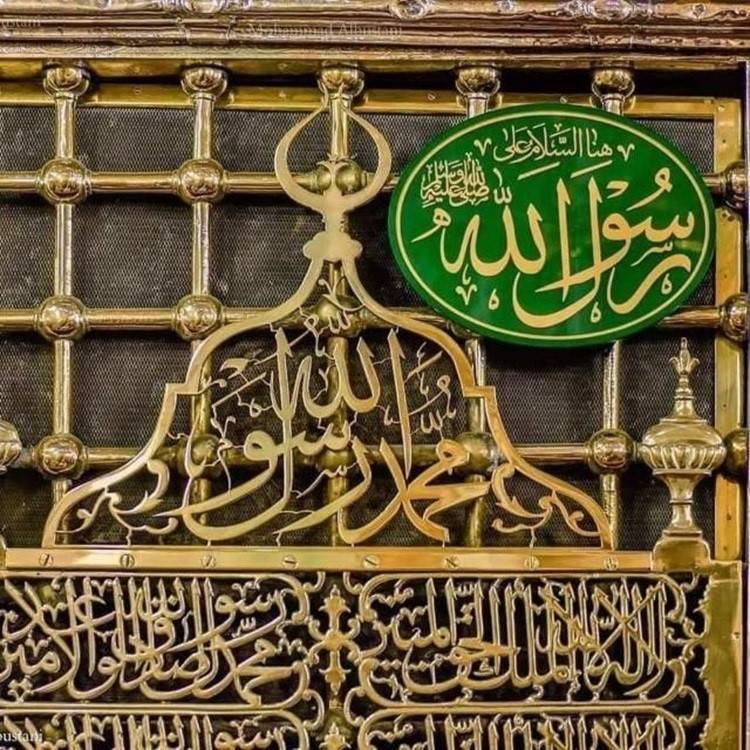
Moulana Khalil Ahmad Saharanpuri رحمه الله used to present himself at the blessed grave of Nabi صلى الله عليه وسلم in a remarkable manner. Besides being extremely quiet, he never stood too close to or in front of the muwaajahah (The front portion of the grave with the metal railings where salaat and salaam is presented to Nabi صلى الله عليه وسلم) Fearfully, respectfully and carefully, he used to walk towards the grave. Resembling a criminal or convict, he used to stand at a distance and present his salaat and salaam with utmost humility. He used to be greatly grieved by those who recited their salaat and salaam in a raised voice. He would say, “Nabi صلى الله عليه وسلم is alive. To present the salaam in such a tone is disrespectful and a source of inconvenience to him. Salaam should be presented in a soft tone as Nabi صلى الله عليه وسلم hears it.”
A person once objected to this, “The blessed body of Nabi صلى الله عليه وسلم is surrounded by many walls. How is it possible for him to hear a soft tone?” Moulana replied, “This objection will equally apply if one has to scream and shout because no matter how loudly a person raises his voice, it will not reach into the grave. Rather, this is his speciality. Ordinary laws do not apply here.”
Some narrations state that when Moulana would stand before the Rawdhah to recite salaat and salaam, he would tremble from head to toe and tears would flow from his eyes. He once stood at the Rawdhah and recited the entire Qur’aan to Nabi صلى الله عليه وسلم in Taraweeh.
(Golden Pages of Madinah Munawwarah pg.49)
[hr height=”30″ style=”default” line=”default” color=”” themecolor=”0″]
Moulana Muhammad Farouk رحمه الله
Shah Muhammad Farouk رحمه الله expressed his thoughts on route to Madinah Munawwarah, “How exalted and unblemished is the status of Madinah, and how ignoble and wicked am I! How exalted is the status of Madinah and how sinful am I! From where have you mustered the courage to come here? With what face will you present yourself before Rasulullah صلى الله عليه وسلم? … On the one hand, the enthusiasm and passion to be in the presence of Rasulullah
صلى الله عليه وسلم was spurring me forward, whilst on the other hand, my shortcomings were pulling me back. What should I do? I cannot measure to what extent I have opposed his lifestyle. How many sunnats of his have I trampled beneath my feet? Today I will come face to face with that benefactor whose lifestyle and mannerisms I have undermined and whose sunnats I have trampled. Am I worthy of standing before him? I became entangled between a feeling of restlessness and endurance. Are you aware of what you are doing? Where have you taken the courage to come?
However, the poetic brilliance of a saintly person was a source of guidance for me from which I derived immense reassurance and solace. I do not remember the first line…
Let the darkness of your sins accompany you to the perfect spiritual guide.
The stark realisation of my inner impurity troubled me, but I was going towards an ocean brimming with purification. Most certainly, any person who dives into this ocean will be spiritually purified. However, how can I pre-empt my inner reformation? Surely, by taking the darkness of your sins (to the ocean of recognition) this darkness will, In-sha-Allah, upon reaching there be immediately obliterated. Subsequently, this verse of the Qur’an came to mind.
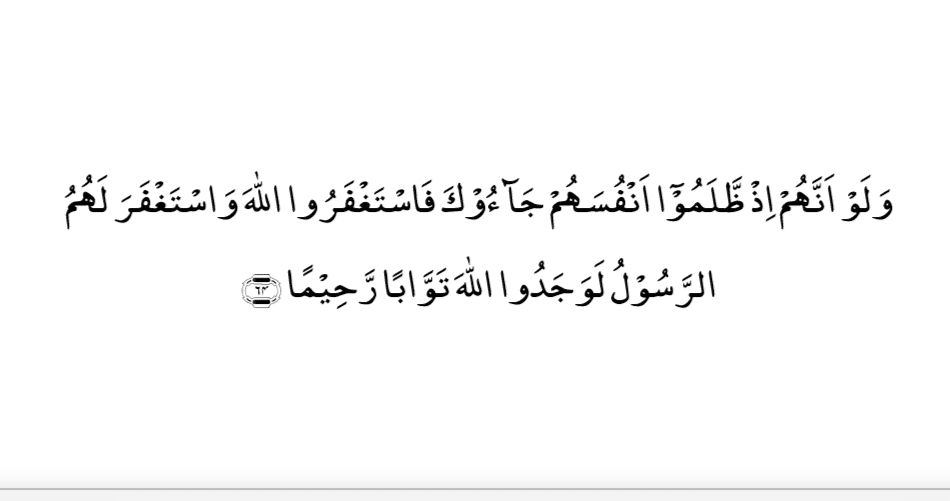
The understood meaning of this verse is, “When you have oppressed your souls and you have perpetrated sinful deeds, then present yourself to Our Rasul صلى الله عليه وسلم, and in his presence seek forgiveness from Us, and when you do that, you will find Us accepting your repentance and having mercy upon you. (Surah Nisa, verse 64)
As Moulana proceeded towards Masjidun Nabawi, he thought to himself, “O Allah, my fortune has proliferated. You have showered immeasurable favours upon a nonentity like myself who is devoid of any worth and significance. O Allah, You have truly honoured Your servant despite his insignificance. For this unfaithful servant, at this moment, there is no greater favour and honour that You could have bestowed upon him.
O Allah, my eyes are so impure that they do not deserve the vision of the grave of Rasulullah صلى الله عليه وسلم. How do I find purity within my eyes that will enable me to look at the blessed Raudhah?
O Allah, if only You can grant me such tears that will purify and cleanse the impurity and weakness of my sight so that I can see the blessed grave of Your beloved Nabi صلى الله عليه وسلم. This purification will enable me to view it with due respect.”
After Moulana presented his salaam, the appearance of Nabi صلى الله عليه وسلم flashed across his mind, “SubhanAllah! What a beautiful glowing face, all dressed in white. His blessed beard is beyond description. SubhanAllah! What beauty Allah جل جلاله has given to the beloved son of Aaminah! Alhamdulillah! How handsome is Rasulullah صلى الله عليه وسلم with a radiant face wearing a round hat on his head. Oh, his gentle beautiful eyes with surma (antimony) applied
to them, focusing towards his visitor – looking at his Ummati. This is a moment when a lover is infatuated by the ecstasy of meeting his beloved. How deficient and weak am I in front of the greatest of mankind. Our eyes are imperfect, so what can we see? It is no small favour that the blessed and perfect eyes of Rasulullah صلى الله عليه وسلم have focused upon this insignificant and sinful servant. It is something most precious and significant.”
May Allah Ta’ala take us again and again to the Haramain Shareefain with Ikhlas, Adab and acceptance. Ameen.
يَا رَبِّ صَلِّ وَسَلِّمْ دَائِمَاً أَبَدًا عَلَىْ حَبِيْبِكَ خَيْرِ الْخَلْقِ كُلِّهِمِ
“O Sustainer, shower Salaat and Salaam forever and ever upon Your beloved, who is the best of all creation.”
جَزَي اللهُ عَنَّا نَبِيَّنَا مُحَمَّدًا صَلَّی اللهُ عَلَیْه وسَلَّمَ بِمَا هُوَ أَھْلُهُ
May Allah Ta’ala جل جلاله reward our Nabi Muhammad صلى الله عليه وسلم on our behalf such a reward that is due to Him.